Remedy Skin review: best starting point
A dermatologist-founded skincare line built on a refreshingly boring premise: short routines, familiar published ingredients, and education instead of miracle vocabulary. What you're buying is curation and credibility packaging — worthwhile for routine-overwhelmed beginners, less compelling for anyone who already reads ingredient lists themselves.
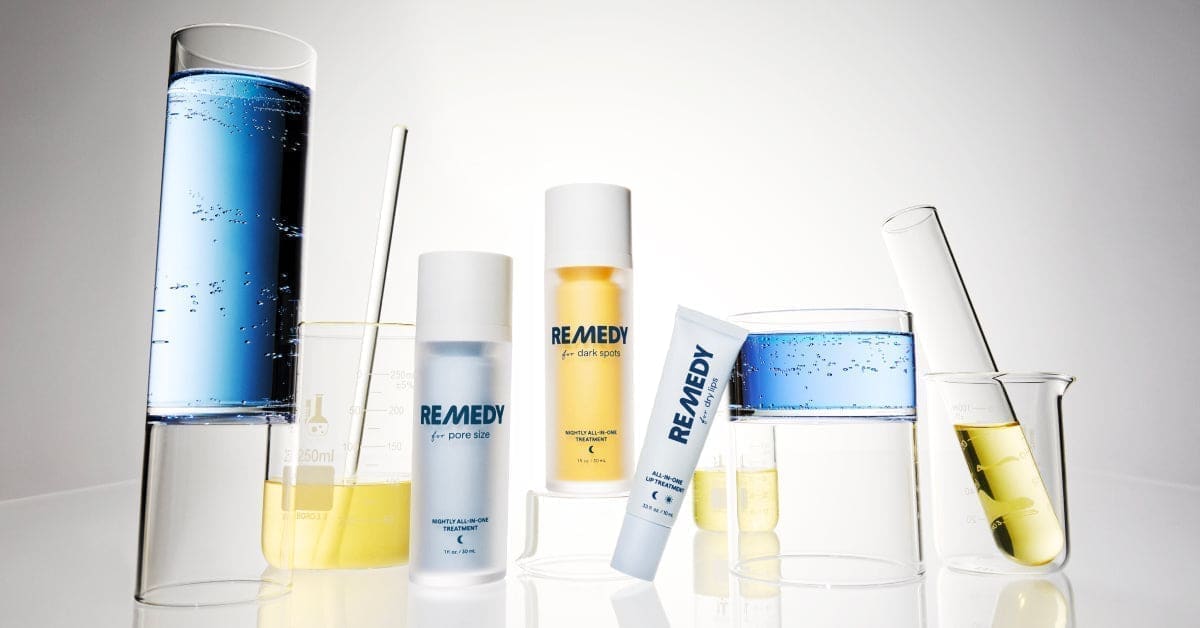
What we like
- Founded and fronted by a practicing dermatologist, not a marketing persona
- Small, legible catalog — the anti-shelf-of-thirty-products
- Ingredient lists lean on well-known published staples rather than proprietary mystique
- Educational content around the brand is genuinely instructive
Flaws but not dealbreakers
- You pay a founder-fame premium over functionally similar formulas
- Simplicity cuts both ways — advanced users will find the range limiting
- Social-media provenance invites hype cycles and restock frenzies
- No product line replaces an actual dermatologist visit for real skin conditions
When a dermatologist becomes one of the most-followed skin educators on the internet, the skincare line is inevitable — the only question is whether it lands as a cash-grab or a coherent product. Remedy is the latter case study: a deliberately small range whose entire pitch is restraint, launched by a founder whose public identity was built on debunking exactly the kind of overclaiming skincare marketing usually runs on.
The catalog reads like a routine, not a store: cleanse, treat, moisturize, protect, with little orbiting the core. Formulas lean on ingredients the wider skincare world already knows and publishes on — the familiar hydrators, barrier lipids, and established actives — listed plainly rather than hidden behind trademarked complexes. That's a positioning choice worth naming precisely: the brand isn't claiming to have invented new chemistry, it's claiming to have chosen sensible chemistry for you and priced in the choosing. Textures and packaging are competent rather than luxurious, which fits the thesis — this is skincare as infrastructure, not as treat.
We ran the same rubric across the category in The Skincare Shelf, Sorted: Routine, Curiosity, and Keep-Away if you want the comparison.
That framing is also the fair critique. Functionally comparable formulas exist across the price spectrum, some below this one, and a shopper fluent in ingredient lists can assemble the same routine architecture themselves for less — often from the same suppliers' aisles the founder once recommended for free. What the fluent shopper doesn't get elsewhere is the packaged confidence: a short menu where every item was picked by someone with clinical credentials and a public reputation staked on not overselling, arranged so the order of operations is the packaging rather than a research project. For the much larger population that finds the skincare aisle genuinely paralyzing — the people for whom every purchase currently begins with an hour of contradictory videos — that curation is a real product, arguably the main one, and pricing it is fair game.
The social-media provenance carries its usual side effects. Launches sell through fast, restocks become events, and the community energy around the brand can shade into the very hype its founder built a following by puncturing. None of that is a formula problem; it is a buying-experience problem worth expecting.
One boundary matters more than the rest of the review. A well-chosen routine is maintenance for ordinary skin, and that is the true ceiling of any product line, this one included — persistent acne, pigmentation changes, reactive or painful skin are appointment problems, not checkout problems, and the founder's own content says as much. Use the brand as it positions itself: a sane default routine from a credible source.
There is a structural point worth holding onto with any brand built around a curated routine: the curation is being done by a company that sells the products in it. That is not automatically a problem — a well-edited shelf genuinely beats an overwhelming one, and the alternative is a shopper assembling a routine from whichever ingredient the internet is excited about this month. But it does mean the answer to 'what should I use' will never be 'less than you are buying now', and that is exactly the answer a lot of skin actually needs. Treat the routine as a starting shape rather than a prescription, and drop whatever you cannot tell is doing anything.
Our bottom line: Remedy is a good answer to a real question — 'what should I actually use?' — asked by people with no interest in becoming hobbyists. Buy it for the editing, not for magic; skip it if you already enjoy doing the editing yourself; and see a human dermatologist, including possibly the founder's actual profession, for anything a moisturizer shouldn't be asked to solve.
Key specs
- Type
- Dermatologist-founded direct-to-consumer skincare
- Positioning
- Minimalist routines, education-first marketing
- Best for
- Beginners who want a vetted short routine